
Call this number
Google Map in English
Google Maps in Japanese
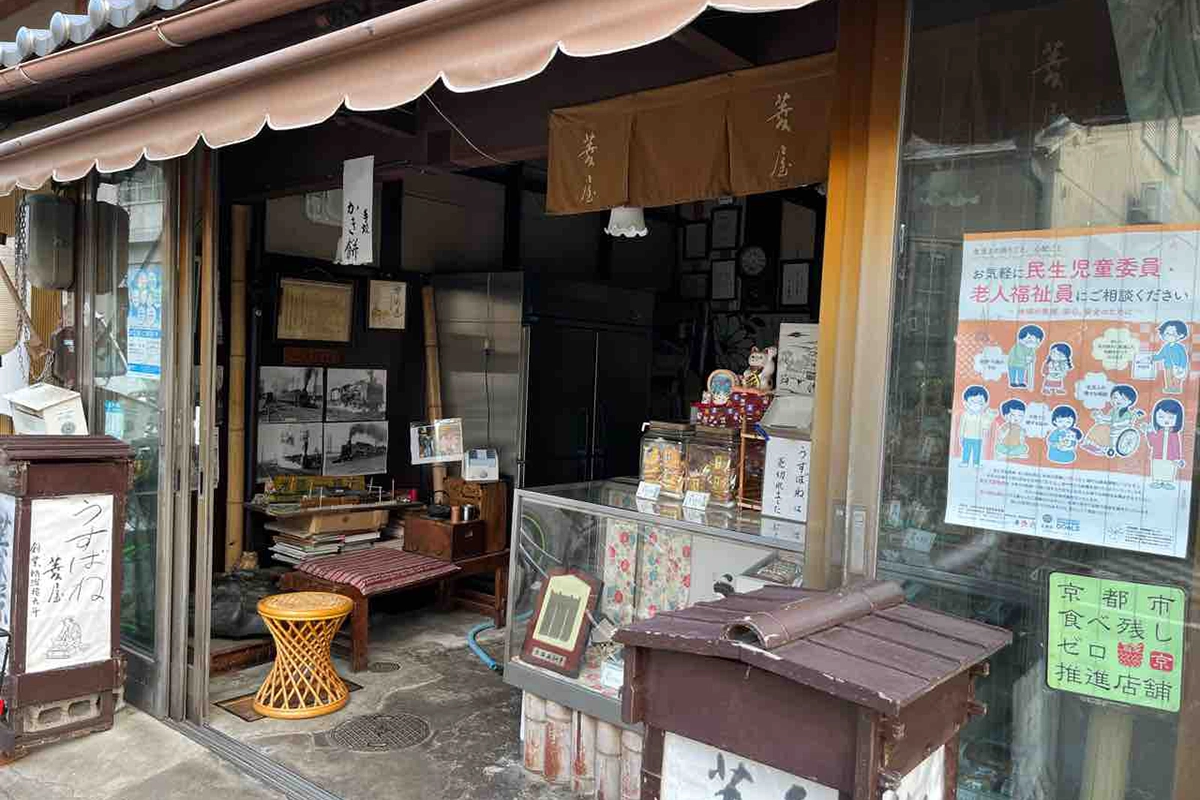
We found Hishiya almost by accident. We were staying at the Mercure Kyoto, right next to Nishi Hongan-ji, and one morning decided to walk it instead of taking a cab — about ten minutes on foot, tucked into the old Shimabara pleasure quarter near the Shimabara Daimon gate. The storefront looked exactly like the neighborhood dagashiya near where I grew up, the kind of small mom-and-pop candy shop that barely changes decade to decade. That resemblance turned out to be more accurate than I expected.
Hishiya opened in 1886, and it’s still run today by a husband-and-wife team who make everything by hand, just the two of them, almost every day of the year except New Year’s and Obon. There’s no staff, no factory line, no website, and as far as anyone can tell, no one lined up to learn the technique when they eventually retire. A few Kyoto food writers have already started treating a visit here as something to do “while you still can,” which says a lot about how precarious small, hand-run shops like this are.
Hishiya’s signature product is usubane, a rice cracker whose name roughly translates to “thin wing,” and the name isn’t an exaggeration. These crackers are shaved down to about 0.4 millimeters — thin enough that you can see light through them — and the whole process, start to finish, takes somewhere between ten days and two weeks.
They starts with habutae mochi rice sourced from Shiga Prefecture, steam and pound it into mochi, let it rest for a few days, then slice it paper-thin by hand. Each piece gets laid out on a net and sun-dried before it’s brushed with soy sauce and baked one at a time, flipped constantly so nothing burns. It’s slow, physical work, and by the shop owner’s own account, they could theoretically make the crackers even thinner, but past a certain point they stop puffing up in the oven and just turn out flat and dense — no longer usubane at all.
The result is worth the wait: a cracker so light it barely registers any weight in your hand, crisp enough to shatter the moment you bite it, and seasoned with just enough soy sauce to round out the rice’s natural sweetness. It’s less like eating a snack and more like tasting air with a hint of flavor.
Usubane at Hishiya has apparently been popular in Kyoto since the Edo period, originally served alongside tea, though these days people just as often eat it on its own. Because of how labor-intensive it is, though, the shop can’t make much at a time, and it sells out constantly. If you walk by and see a sold-out sign, that’s not bad luck — that’s just the two of them somewhere in the back, working through another two-week batch. We got lucky and caught them with stock the morning we visited.
One more thing worth knowing if you’re planning a visit: Hishiya doesn’t sell online, doesn’t ship, and doesn’t take phone orders for pickup. If you want to try usubane, you more or less have to show up in person and hope the timing works out. That inconvenience is part of what makes it special, honestly — in a city full of souvenir shops selling the same yatsuhashi boxes, this is a snack you can only get by actually being there.
If you are staying anywhere near Nishi Hongan-ji or the Shimabara area, it’s an easy detour worth making, and a much better story to bring home than another mass-produced box of sweets from the station gift shop
Submission successful. You will receive a confirmation email, shortly.