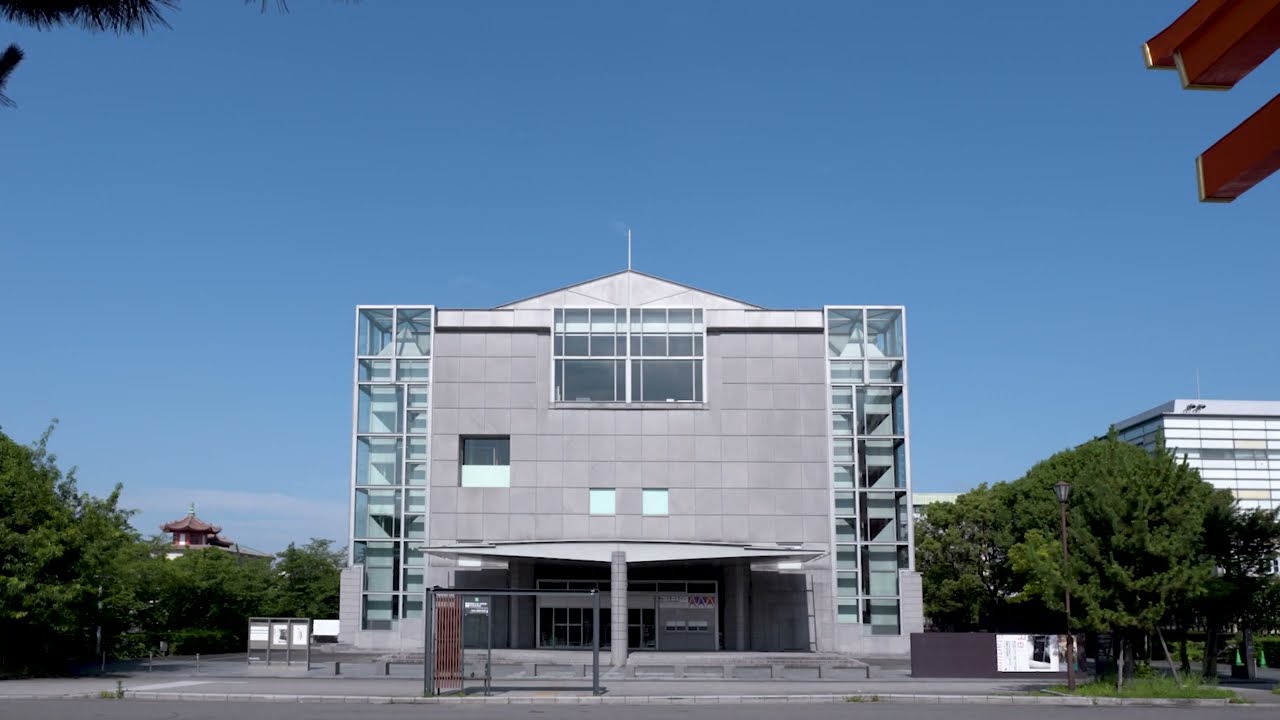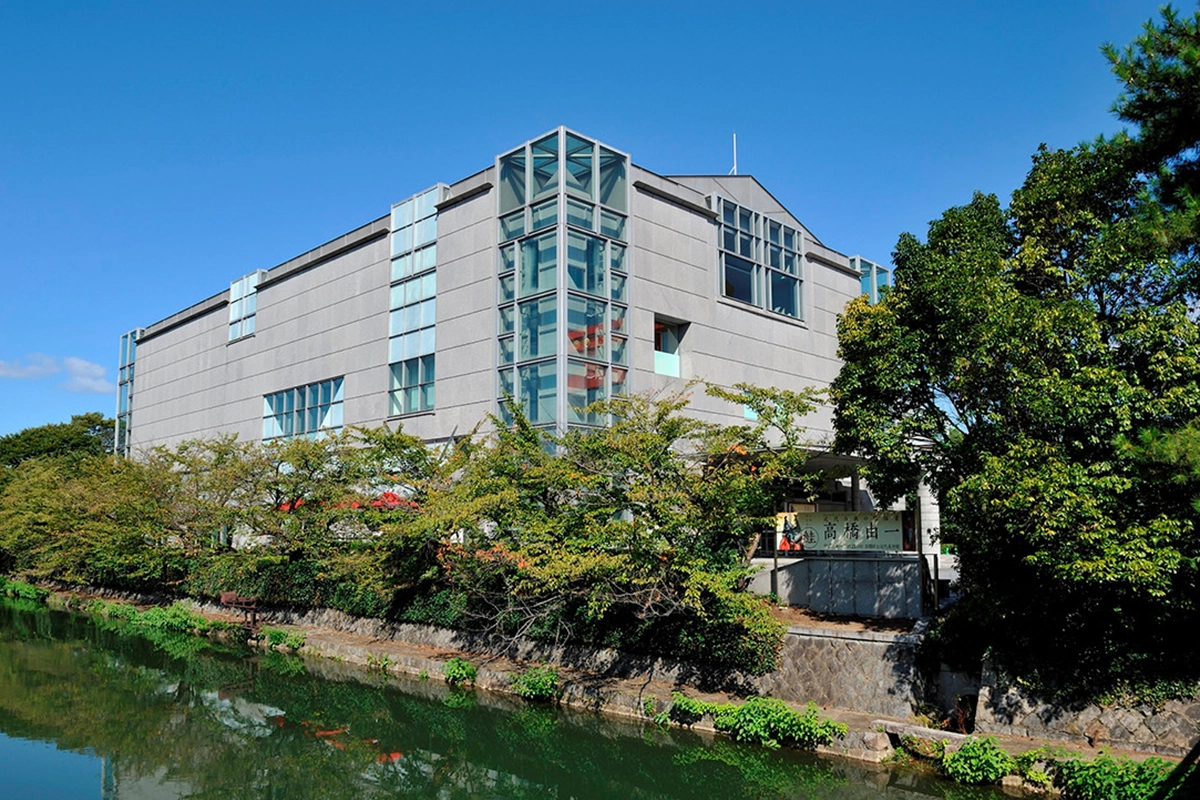
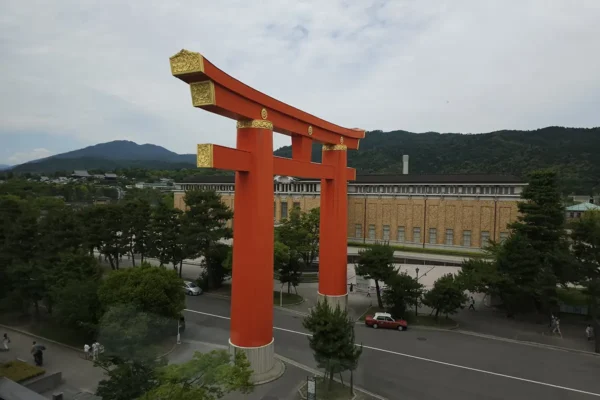
If you’re looking for a museum that feels as good to visit as it looks in photos, the National Museum of Modern Art, Kyoto — known locally as MoMAK — is one we make a point of visiting every single time we’re in the city. Part of that is the art, and part of it is simply where the building sits: right beside the massive torii gate of Heian Shrine, in the middle of Kyoto’s Okazaki cultural district.
The National Museum of Modern Art opened on this site in 1963, and its collection has grown to roughly 13,000 works over the decades. Rather than trying to cover everything, it focuses on art from Kyoto and the wider Kansai region — you’ll find a strong showing of Japanese-style paintings from the Kyoto School alongside crafts like ceramics, textiles, and metalwork, plus Western-style paintings, prints, sculpture, and photography. The special exhibitions are where it really shines, though. The National Museum of Modern Art runs several a year, often built around a specific artist or movement, and they’re consistently the reason we keep coming back — every visit turns up something we hadn’t expected.
The fourth-floor Collection Gallery is where the museum’s permanent holdings live, and it’s worth setting aside real time for. Rather than one static display, the works are rotated approximately twenty times a year, so a combined ticket covering both the permanent collection and a special exhibition is often available at a discounted rate, and even repeat visitors tend to see something new.
The gallery spans Japanese-style painting, Western-style painting, prints, sculpture, and crafts — including ceramics, textiles, metalwork, and lacquerware — alongside photography, drawn from Kyoto and the wider Kansai region. It’s a nice complement to the special exhibitions: the temporary shows give you a deep dive into one artist or theme, while the Collection Gallery gives you the broader picture of Japanese modern art.
We usually start with lunch at the restaurant, café de 505, on the first floor before heading up to explore, which is a nice way to ease into the visit rather than rushing straight into the galleries. Before heading out, it’s worth swinging by the museum shop, Artprue. It stocks exhibition-related catalogs, original museum goods, and glass crafts, along with items from museums overseas — good for picking up a print, a book on an artist you just discovered, or a small souvenir that’s a step above the usual tourist fare.
Later, on the upper floor of the National Museum of Modern Art, there’s a quiet resting area that looks out toward Higashiyama and gives you an up-close view of the Heian Shrine torii gate — a nice spot to sit for a few minutes before moving on.
Right alongside the National Museum of Modern Art runs the Lake Biwa Canal, a Meiji-era waterway originally built to carry water from Lake Biwa into Kyoto. These days it’s better known for its beauty than its engineering — the banks are lined with cherry trees, and in spring the whole stretch turns into one of the city’s loveliest hanami spots.
If you time your visit for late March to early April, you’ll catch the blossoms in full bloom, with branches leaning out over the water and the great vermilion torii gate of Heian Shrine rising up behind them. There’s even a small traditional boat, the jikkokubune, that cruises the canal during peak season, giving you a totally different view of the same scenery you just admired from the museum’s resting area. Even outside of cherry blossom season, though, the canal is a pleasant, quiet walk — a nice way to bridge the gap between the museum and Heian Shrine itself.
And if the weather’s cooperating, don’t rush off after the museum. Heian Shrine itself is enormous, with multiple shrine buildings and gardens to wander through, so it’s worth setting aside extra time to just walk the grounds and enjoy the afternoon.