
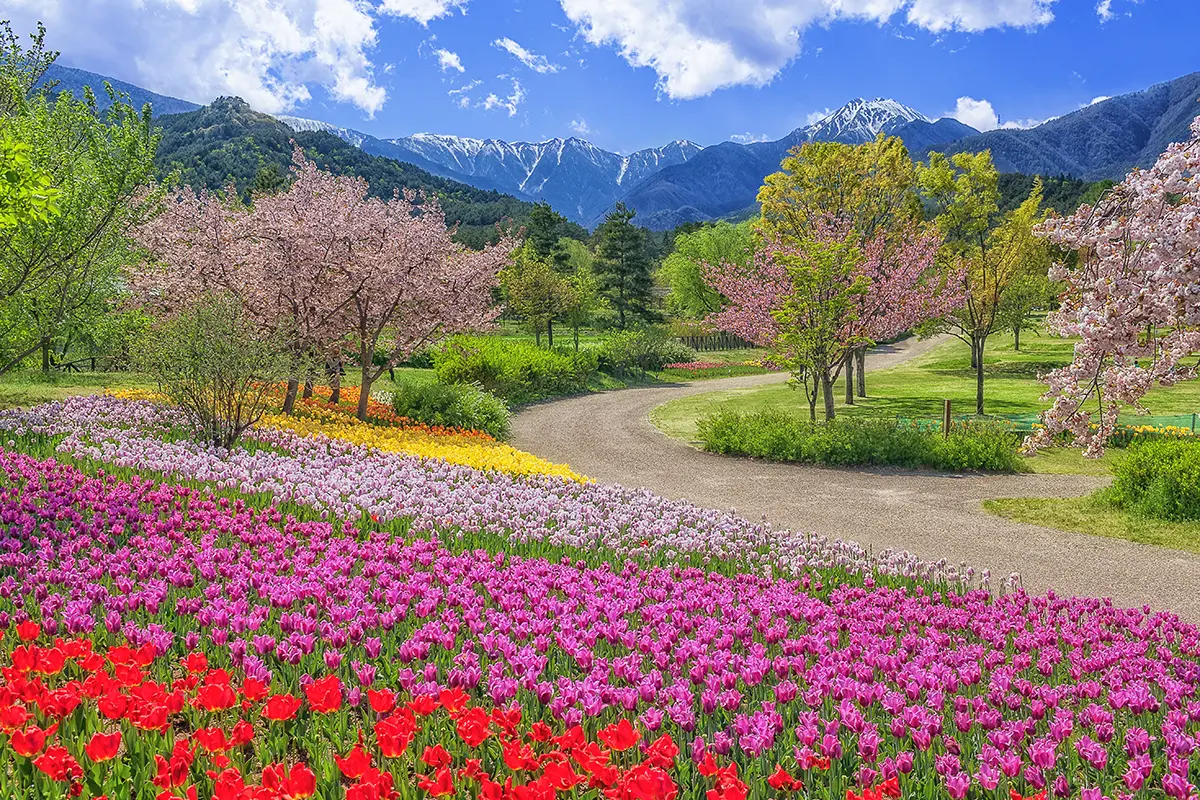
Unlike many countries where flowers are simply admired for their beauty, Japan celebrates them as cherished symbols of the changing seasons. Each bloom marks the arrival of a new chapter of the year, inspiring festivals, photography, poetry, and leisurely strolls through parks, temples, and gardens. This deep appreciation reflects the Japanese concept of mono no aware—an awareness of life’s fleeting moments and the beauty found in their impermanence.
Across the country, magnificent floral displays emerge one after another, each lasting only a few precious weeks. Rather than focusing on a single flower, you may plan your visits around Japan’s ever-changing bloom calendar, discovering a different landscape with each season.
From mountains blanketed in cherry blossoms to temple gardens glowing with hydrangeas after a gentle rain, these five destinations showcase some of Japan’s most breathtaking floral spectacles from early spring through the beginning of summer.
Best Time to Visit: Early April
Spring season begins with Japan’s most beloved flower—the sakura. While cherry blossoms bloom throughout the country, few places rival the grandeur of Mount Yoshino, considered one of Japan’s most celebrated cherry blossom destinations.
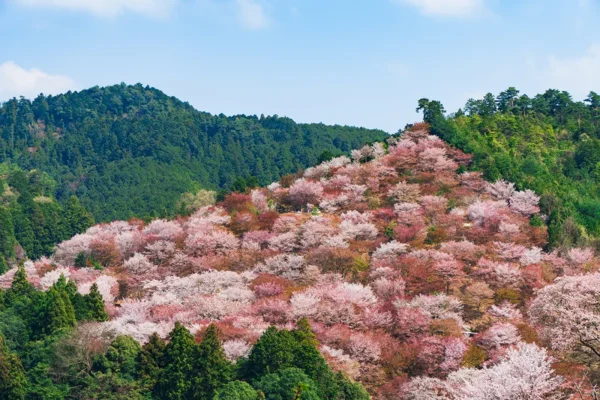
More than 30,000 cherry trees cover the mountainside, creating layers of soft pink that gradually bloom from the lower slopes to the summit. This natural progression extends the viewing season and rewards visitors with ever-changing scenery as they climb the mountain.
Recognized as part of a UNESCO World Heritage Site, Mount Yoshino combines spectacular scenery with centuries of history, making it one of Japan’s most unforgettable spring landscapes.
Why We Love It
Unlike city parks, Mount Yoshino offers breathtaking panoramic views where cherry blossoms stretch across entire mountainsides, creating one of Japan’s most iconic spring scenes.
Photo Caption Suggestion: Thousands of cherry trees blanket the mountainsides of Mount Yoshino, creating one of Japan’s most spectacular spring panoramas.
Best Time to Visit: Late April to Early May
As cherry blossoms gently fade, graceful cascades of wisteria take center stage.
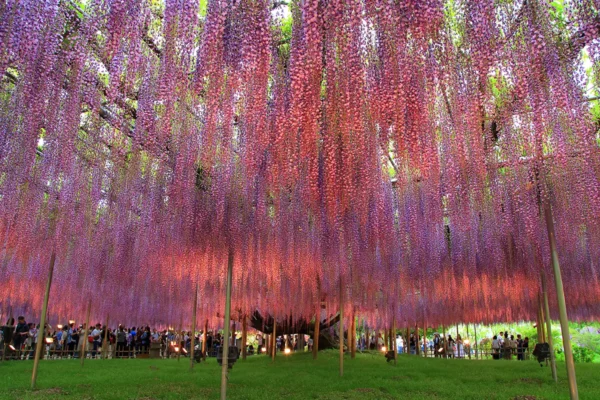
Ashikaga Flower Park is home to one of Japan’s oldest and most magnificent wisteria trees, whose sweeping branches create an enchanting canopy of purple blossoms. Visitors can stroll beneath tunnels of lavender, white, and yellow flowers while delicate fragrance fills the air.
When evening arrives, carefully designed illuminations transform the gardens into a magical landscape, making this one of Japan’s most photographed spring destinations.
Why We Love It
Walking beneath centuries-old wisteria feels like stepping into a fairy tale, especially after sunset when the flowers are beautifully illuminated.
Photo Caption Suggestion: A majestic wisteria tree drapes visitors beneath cascading blossoms that have captivated generations.
Best Time to Visit: Late May
As spring matures, Kyoto’s elegant gardens become the perfect setting for blooming irises.
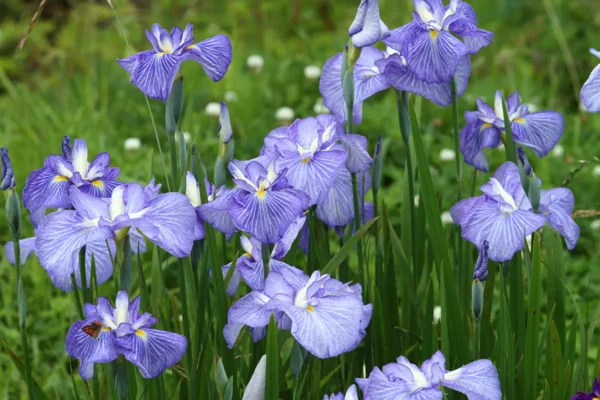
The peaceful gardens of Heian Shrine feature hundreds of purple and blue irises (Hanashōbu) surrounding tranquil ponds, creating scenes that feel like living works of art. Reflections dance across the water while graceful bridges and carefully designed landscapes showcase the refined beauty of traditional Japanese garden design.
Compared to Kyoto’s bustling cherry blossom season, the iris garden offers a quieter and more contemplative experience.
Why We Love It
The combination of elegant gardens, reflective ponds, and seasonal flowers captures the timeless beauty that makes Kyoto so unforgettable.
Photo Caption Suggestion: Colorful irises bloom beside peaceful ponds, creating one of Kyoto’s most elegant late-spring landscapes.
Best Time to Visit: Late April through May
Few landscapes in Japan create as much visual impact as the rolling hills of Hitachi Seaside Park during nemophila season.
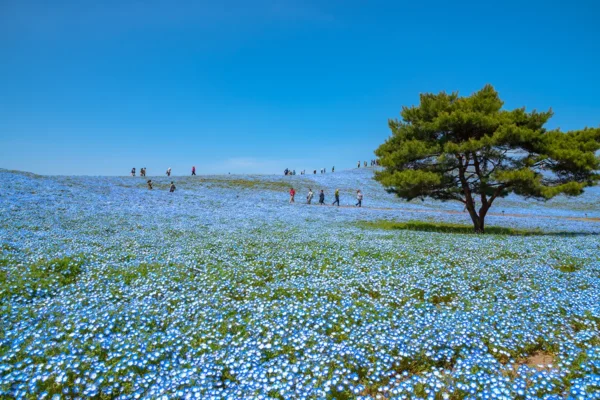
Millions of delicate blue flowers blanket the hillsides, blending almost seamlessly with the bright spring sky. Walking paths wind through this sea of blue, offering breathtaking panoramic views from every angle.
The effect is both surreal and peaceful, making it one of Japan’s most iconic flower destinations.
Why We Love It
The endless expanse of blue flowers merging with the horizon creates a landscape unlike anywhere else in Japan.
Photo Caption Suggestion: Millions of baby blue eyes transform the rolling hills into a breathtaking ocean of blue.
Best Time to Visit: June
As Japan’s rainy season begins, hydrangeas burst into brilliant shades of blue, pink, purple, and white.
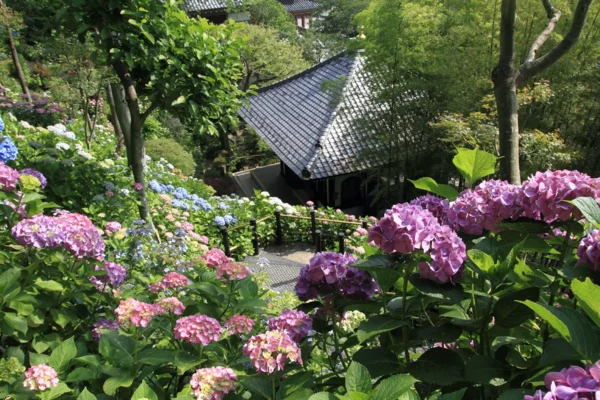
Few places celebrate the season more beautifully than Hase-dera Temple in Kamakura. Stone pathways lined with thousands of colorful hydrangeas lead visitors up the hillside toward sweeping views of the coastline below.
Light rain only enhances the experience, giving the blossoms a fresh vibrancy while creating the peaceful atmosphere for which Japanese temples are known.
Why We Love It
Hydrangeas and gentle summer rain create an atmosphere that is uniquely Japanese—quiet, refreshing, and remarkably beautiful.
Photo Caption Suggestion: Stone pathways lined with vibrant hydrangeas lead visitors through one of Kamakura’s most beloved temple gardens.
Japan’s flower season offers a new way to experience the country’s deep connection with nature.
Following Japan’s seasonal flower calendar invites travelers to slow down, embrace the rhythm of the changing seasons, and discover landscapes that are both breathtaking and deeply rooted in Japanese culture. Whether you’re visiting for the first time or returning to explore a different season, these remarkable destinations offer unforgettable moments that celebrate the beauty of Japan throughout the year.