
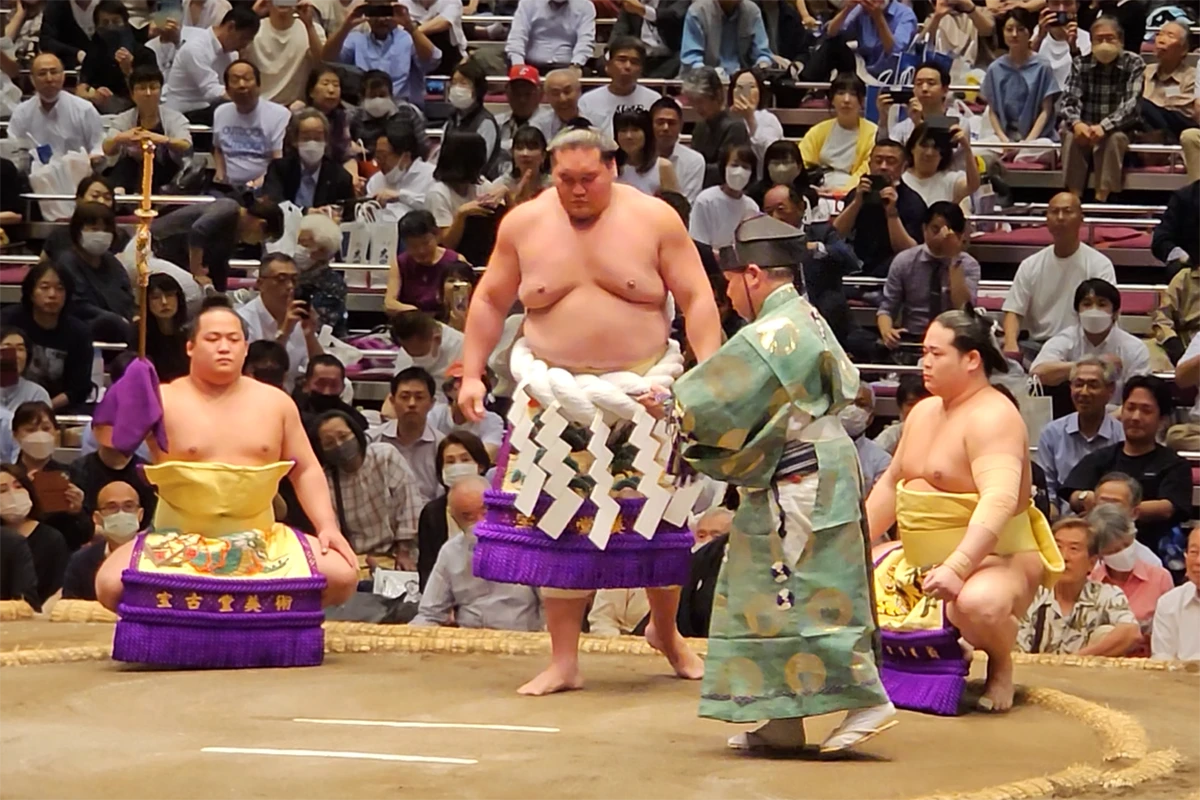
Sumo (相撲) is Japan’s national sport and one of its oldest traditions, with a history spanning more than 1,500 years. Watching a tournament is much more than attending a sporting event—it’s an opportunity to experience centuries-old rituals, dramatic competition, and a uniquely Japanese atmosphere.
Six Grand Sumo Tournaments (Honbasho) are held in Japan each year, with each tournament lasting 15 days. The tournaments are held in Tokyo (January, May, and September), Osaka (March), Nagoya (July), and Fukuoka (November), giving visitors multiple opportunities throughout the year to experience Japan’s national sport. Over the years, we have attended several tournaments at Kokugikan in Tokyo and have become enthusiastic fans. Even while living in the United States, we follow every tournament through NHK World’s Grand Sumo broadcasts. Becoming familiar with a few popular wrestlers before your visit makes watching the matches in person even more exciting.
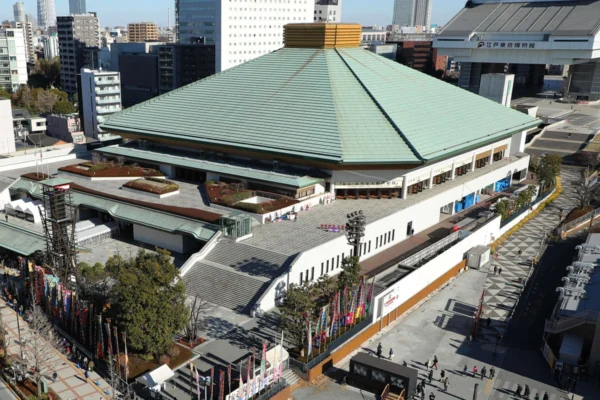
Sumo has become increasingly popular in recent years, and tickets often sell out quickly—especially for weekends and the final days of each tournament. Tickets generally go on sale about five weeks before the tournament begins, so it’s important to purchase them as soon as they become available.
The Japan Sumo Association announces the tournament schedule and official ticket sales dates. We recommend purchasing tickets through the Association’s official ticketing partner or another reputable ticket vendor.
Be cautious of unofficial resale websites. The Japan Sumo Association has warned fans about unauthorized ticket sellers, and counterfeit or invalid tickets can be a problem. Tickets are generally non-refundable and cannot be exchanged, so double-check your tournament date and seating selection before completing your purchase.
When purchasing through the Association’s English website, the ticketing process is handled by PIA Corporation, one of Japan’s largest ticket agencies. Online reservations are straightforward, but international visitors typically need to pick up their physical tickets at a designated convenience store after arriving in Japan. Service fees may also apply.
Sumo arenas offer three seating options, each providing a different viewing experience.
These seats are located directly beside the dohyo (ring) and provide the closest view of the action. Because wrestlers occasionally fall into the audience, these seats carry some risk and are not available to children. They are also the most expensive and difficult tickets to obtain.
Traditional masu box seats surround the ring and are one of the most distinctive ways to experience a sumo tournament. Spectators remove their shoes and sit on cushions inside a square box. Boxes are typically sold for either two or four people, with sections ranging from S to C depending on their distance from the ring.
We usually reserve a four-person box for just the two of us. Although this costs more, it provides plenty of room to stretch our legs and enjoy the tournament comfortably. Four adults sharing one box can feel quite crowded, especially during the six-hour event.
Chair seating offers the comfort of standard stadium seating and provides an excellent view of the entire arena. Although farther from the ring, the elevated angle actually makes it easier to follow each match.
If sitting on the floor for several hours sounds uncomfortable, we highly recommend choosing chair seats. They offer a very enjoyable viewing experience while allowing you to stay comfortable throughout the day.
The tournament begins early in the morning with matches featuring the lowest-ranked wrestlers. As the day progresses, higher divisions compete, culminating with the top-ranked wrestlers in the late afternoon.
A typical schedule looks like this:
We usually arrive shortly after lunch. This gives us plenty of time to browse souvenir shops, enjoy arena food, and watch the Juryo matches before the excitement builds for the top division.
One event you should not miss is the Makuuchi Dohyo-iri, when all of the top-division wrestlers enter the ring wearing beautifully embroidered ceremonial aprons (kesho-mawashi). This centuries-old tradition is one of the highlights of the day.
During the Tokyo tournament we attended in 2023, we witnessed a memorable kinboshi, or “Golden Star” victory, when a lower-ranked wrestler defeated the Yokozuna, sumo’s highest-ranked champion. The crowd erupted in celebration, and many spectators tossed their seat cushions (zabuton) into the air—a long-standing tradition after major upsets. Although this custom remains famous, spectators are now strongly discouraged from throwing cushions because they can injure other fans.
After the tournament, we like to enjoy dinner at a restaurant specializing in chanko nabe, the hearty hot pot traditionally eaten by sumo wrestlers. It’s the perfect way to complete the experience and sample one of Japan’s most iconic comfort foods.
Since tournament matches finish around 6:00 p.m., it’s easy to make dinner reservations or continue exploring the city afterward.